
7 Best Men's Walking Shoes for Europe Travel in 2026
As an Amazon Associate, this website earns from qualifying purchases.
The short answer
The Merrell Moab 3 and Hoka Transport grip cobblestones best. Pick the Salomon X Ultra 4 GTX for rain, or the Ecco Soft 7 for dinners out.
Last updated September 2026
Contents16
- #1. Merrell Moab 3: best cobblestone grip for rougher day trips
- #2. Hoka Transport: balance of grip and a casual look
- #3. Salomon X Ultra 4 GTX: full waterproofing for wet cobblestones
- #4. Ecco Soft 7: dress-casual look with a flexible sole
- #5. Skechers Go Walk Arch Fit: built for standing pain, not terrain
- #6. Vionic 23Walk 2.0: removable arch support with a dress-ready look
- #7. Brooks Addiction Walker 2: all-day standing with a dressier upper
- Factors to consider when choosing men's walking shoes for Europe travel
- Climate changes which pick makes sense
- Break your shoes in before you fly
- One pair or two?
- Sizing across brands isn't consistent
- Wide feet and orthotics
- How we picked the best men's walking shoes for Europe travel
- Caring for your feet mid-trip
- More in this guide
Our top 7 picks
- 1Best cobblestone grip for rougher day trips
 Merrell Moab 3 (Men's)
- Pigskin leather and mesh upper
- Vibram TC5+ outsole with 5mm lugs
- Bellows tongue keeps out debris
- 2Balance of grip and a casual look
 Hoka Transport (Men's)
- Vibram EcoStep Natural rubber outsole
- Abrasion-resistant Cordura upper with a water-repellent finish
- EVA midsole made with 30 percent sugarcane
- 3Full waterproofing for wet cobblestones
 Salomon X Ultra 4 GTX (Men's)
- Gore-Tex waterproof membrane
- Contragrip MA outsole with chevron lugs
- Quicklace pull-cord lacing system
- 4Dress-casual look with a flexible sole
ECCO Soft 7 Sneaker (Men's)
- Full-grain and nubuck leather upper
- Removable, leather-covered inlay sole
- Soft, breathable textile lining
- 5Built for standing pain, not terrain
 Skechers Go Walk Arch Fit (Men's)
- Removable Arch Fit insole with podiatrist-certified arch support
- Lightweight Ultra Go cushioning
- Dual-density traction outsole
- 6Removable arch support with a dress-ready look
 Vionic 23Walk 2.0 (Men's)
- Leather or suede panels paired with breathable mesh
- Removable mesh-covered EVA footbed with arch support
- Moisture-wicking mesh lining and a rubber outsole
- 7All-day standing with a dressier upper
 Brooks Addiction Walker 2 (Men's)
- Full-grain leather upper
- BioMoGo DNA cushioning adapts to stride
- Extended Progressive Diagonal Rollbar for stability
The best men's walking shoes for Europe travel grip cobblestones, hold cushion over long city days, and don't take over your carry-on. The Merrell Moab 3 and Hoka Transport lead on grip. The Salomon X Ultra 4 GTX adds real waterproofing. The Ecco Soft 7, Skechers Go Walk Arch Fit, Vionic 23Walk 2.0, and Brooks Addiction Walker 2 each solve a more specific problem.
Europe's old city centers are built on stone, not flat pavement. Cobblestones, worn marble steps, and centuries-old sidewalks are uneven, and they get slick fast in rain. A full day of sightseeing usually means walking and standing in equal amounts. That might be a museum queue, a market stall, or a train platform. A shoe that only handles one of those jobs well will leave your feet sore by evening.
Every shoe below is a real, current model. We checked each one against the brand's own product page or the listing we link to.
#1. Merrell Moab 3: best cobblestone grip for rougher day trips
Our verdict:
Best cobblestone grip for rougher day trips
Best for travelers whose itinerary mixes old-town cobblestones with day trips to castles or unpaved paths.
View on Amazon- Pigskin leather and mesh upper
- Vibram TC5+ outsole with 5mm lugs
- Bellows tongue keeps out debris
- Removable, contoured insole with arch support
Keep in mind: it runs heavier than the sneaker-style picks here, and it looks more like an outdoor shoe than a city sneaker.
Product details checked September 2026
The Moab 3 uses a Vibram TC5+ outsole made just for Merrell, with 5mm lugs and an 11.5mm heel-to-toe drop. The upper mixes pigskin leather and mesh, with a bellows tongue that keeps out debris and a protective toe cap. A removable, contoured insole adds arch support, and Merrell sells a dedicated wide-width version for a roomier toe box.
The deep lugs bite into gaps between stones better than a flatter sneaker sole does. That matters most on wet, worn-smooth cobblestones, where a flat tread has little to grip.
#2. Hoka Transport: balance of grip and a casual look
Our verdict:
Balance of grip and a casual look
Best for guys who want a shoe that reads as a normal sneaker but grips like something built for rougher ground.
View on Amazon- Vibram EcoStep Natural rubber outsole
- Abrasion-resistant Cordura upper with a water-repellent finish
- EVA midsole made with 30 percent sugarcane
- Quick-toggle laces, spare standard laces and reflective details
Keep in mind: its upper resists light rain but is not a fully waterproof shoe.
Product details checked October 2026
Hoka built the Transport as a walking shoe from the start, not a running shoe adapted for it. The outsole uses Vibram EcoStep Natural rubber with a tread suited to mixed city and trail routes. The upper is a Cordura abrasion-resistant fabric with a water-repellent finish. The midsole uses a sugarcane-based EVA foam.
The original Transport uses an EVA midsole made with 30 percent sugarcane. Its quick-toggle laces make a short stop easier, and standard laces come in the box too. It looks close to a casual city sneaker, so it doesn't stand out at a restaurant table.
#3. Salomon X Ultra 4 GTX: full waterproofing for wet cobblestones
Our verdict:
Full waterproofing for wet cobblestones
Best for travelers heading into a rainy season or mixing wet city days with countryside walks.
View on Amazon- Gore-Tex waterproof membrane
- Contragrip MA outsole with chevron lugs
- Quicklace pull-cord lacing system
Keep in mind: it runs heavier than the sneaker-style picks on this list.
Product details checked September 2026
The X Ultra 4 GTX pairs a Gore-Tex waterproof membrane with Salomon's Contragrip MA rubber outsole. Chevron-shaped lugs grip wet or dry ground. The shoe uses a Quicklace pull-cord system instead of traditional laces, with a small pocket to tuck away the extra cord.
The Gore-Tex membrane is a tested waterproof barrier, not just a water-resistant coating. That matters when a downpour hits mid-sightseeing and you're still an hour from your hotel.
#4. Ecco Soft 7: dress-casual look with a flexible sole
Our verdict:
Dress-casual look with a flexible sole
Best for travelers whose days are mostly smooth city streets who want a shoe that also works at dinner.
View on Amazon- Full-grain and nubuck leather upper
- Removable, leather-covered inlay sole
- Soft, breathable textile lining
Keep in mind: it won't out-grip the lugged picks above on rough, wet stone.
Product details checked September 2026
The Soft 7 is a leather sneaker with a full-grain and nubuck leather upper. Its anatomical last shape molds to your foot. The inlay sole is leather-covered and removable, which adds a little extra width for feet that swell after a long day. The lining is a soft, breathable textile.
For dry or lightly uneven streets, it's a comfortable choice. It reads as a normal leather sneaker, not a travel shoe.
#5. Skechers Go Walk Arch Fit: built for standing pain, not terrain
Skechers Go Walk Arch Fit (Men's)
Our verdict:
Built for standing pain, not terrain
Best for travelers whose main concern is foot pain from hours of standing and walking.
View on Amazon- Removable Arch Fit insole with podiatrist-certified arch support
- Lightweight Ultra Go cushioning
- Dual-density traction outsole
Keep in mind: its outsole isn't built for aggressive cobblestone traction.
Product details checked October 2026
The Arch Fit line uses a podiatrist-certified insole system, built from foot-pressure data collected over more than 20 years. The removable footbed supports the arch directly, not just the heel. This Go Walk version adds light Ultra Go cushioning and a dual-density traction sole.
If plantar pain or general arch fatigue has cut past trips short, this shoe targets that problem directly. The support matters just as much standing in a ticket line as it does walking between sites.
#6. Vionic 23Walk 2.0: removable arch support with a dress-ready look
Our verdict:
Removable arch support with a dress-ready look
Best for guys who want structured arch support on long sightseeing days.
View on Amazon- Leather or suede panels paired with breathable mesh
- Removable mesh-covered EVA footbed with arch support
- Moisture-wicking mesh lining and a rubber outsole
- APMA Seal of Acceptance
Keep in mind: its outsole isn't built for rough or uneven ground.
Product details checked October 2026
The 23Walk 2.0 pairs Vionic's arch support with a removable mesh-covered EVA footbed and a rubber outsole. Leather or suede panels sit alongside breathable mesh. The lining draws moisture away from the foot. It carries the American Podiatric Medical Association's Seal of Acceptance.
Its leather upper also makes it one of the more dress-appropriate options here. That fits a day that moves from sightseeing into dinner without a shoe change.
#7. Brooks Addiction Walker 2: all-day standing with a dressier upper
Brooks Addiction Walker 2 (Men's)
Our verdict:
All-day standing with a dressier upper
Best for anyone who wants a single shoe for hours of standing, hours of walking, and a look that passes at dinner.
View on Amazon- Full-grain leather upper
- BioMoGo DNA cushioning adapts to stride
- Extended Progressive Diagonal Rollbar for stability
- Certified PDAC A5500 diabetic shoe
Keep in mind: its outsole is not built for rugged, uneven ground.
Product details checked September 2026
The Addiction Walker 2 uses a full-grain leather upper with Brooks' BioMoGo DNA cushioning, which adapts to your stride and body weight. An Extended Progressive Diagonal Rollbar helps guide your stride and adds arch and pronation control. The current model is a certified PDAC A5500 diabetic shoe and carries the APMA Seal of Acceptance.
The leather upper looks reasonable with trousers, which matters on a day that runs from sightseeing straight into a nicer meal.
Factors to consider when choosing men's walking shoes for Europe travel
Outsole grip
Cobblestones aren't flat. Each stone sits at a slightly different height, so your foot makes small adjustments with every step. That adds up to real fatigue over a long day.
The Merrell Moab 3 and Hoka Transport use Vibram rubber outsoles. Their tread gives you an outdoor sole in a low shoe. Take care on wet, polished stone even with a treaded sole; grip changes with the surface and how you place your foot.
Waterproofing
Rain makes cobblestones and marble floors more slippery, since centuries of foot traffic have polished old stone smooth. If your trip falls in a wetter season, pick a shoe with a real waterproof membrane. The Salomon X Ultra 4 GTX keeps your feet dry on top of its traction.
Arch support for standing
Museum lines, ticket queues, and market stalls all ask your feet to hold weight without the flex that walking provides. That's why arch-support shoes like the Skechers Go Walk Arch Fit and Vionic 23Walk 2.0 earn a spot here. Their outsoles aren't built for aggressive terrain, but that's not the point.
A dress-casual option
If your trip mixes sightseeing with nicer dinners, the Ecco Soft 7 and Brooks Addiction Walker 2 both look reasonable with trousers. You won't need to pack a separate pair of dress shoes.
Climate changes which pick makes sense
A spring trip through Rome, Florence, or Barcelona usually means mild days with only occasional rain. A non-waterproof pick like the Ecco Soft 7 or Hoka Transport covers most of that trip fine. A winter trip through Copenhagen, Edinburgh, or Amsterdam is colder and wetter. There's a real chance of sleet on top of already slick cobblestones. That's where the Salomon X Ultra 4 GTX earns its keep.
Summer in southern Europe brings its own problem: heat and long hours on your feet with little shade. The Transport has an abrasion-resistant Cordura upper. Try its fit and warmth at home before choosing it for a hot-weather trip. A fully sealed waterproof shoe traps heat.
Break your shoes in before you fly
New shoes on day one of a trip is one of the most avoidable mistakes travelers make. A shoe that feels fine walking around a store can still rub or blister after six hours on cobblestones. Wear any pick from this list for a week or two before you leave. Include one longer walk of two or three hours.
This matters more for structured shoes like the Merrell Moab 3 or Salomon X Ultra 4 GTX. Their firmer materials need a short adjustment period. It matters less for the Ecco Soft 7, whose softer leather tends to feel comfortable faster.
One pair or two?
Most travelers do better with one strong, versatile pair worn the whole trip, broken in ahead of time. That avoids the packing weight and space cost of a second full shoe. The exception is a trip that clearly splits between rugged terrain and dressier evenings. In that case, pack a light backup shoe alongside a primary pick like the Moab 3 or X Ultra 4 GTX.
Sizing across brands isn't consistent
Merrell, Hoka, Salomon, Ecco, Skechers, Vionic, and Brooks all fit slightly differently. None fit exactly like your normal dress-shoe size. Hiking-oriented brands like Merrell and Salomon often run true to size or slightly large, to leave room for a thicker sock. Leather dress-casual shoes like the Ecco Soft 7 tend to run closer to a standard shoe size. Check the specific brand's size chart before ordering, rather than assuming your usual number carries over.
Wide feet and orthotics
If you normally wear a wide shoe or use a custom orthotic, check that before committing to a pick. The Merrell Moab 3 comes in a wide-width version directly from Merrell. The Vionic 23Walk 2.0 and Skechers Go Walk Arch Fit both use a removable insole. You can swap in your own orthotic if you already have one.
A shoe with a non-removable footbed, like the Ecco Soft 7, is harder to customize. That matters if you need more support than the stock insole offers.
How we picked the best men's walking shoes for Europe travel
Every shoe above was checked against the brand's own product page or the listing we link to. That covers outsole material, support features, and upper construction. We did not rely on memory or general brand reputation for any spec here. We left out any claim we could not confirm.
Caring for your feet mid-trip
Pack a small blister kit no matter which shoe you pick. Even a well broken-in shoe can cause a hot spot on a long, hot day. Bring at least two pairs of socks in rotation, so you're never putting a damp sock back on a tired foot.
If your shoes get wet from a downpour, don't leave them sealed in a suitcase overnight. Loosen the laces, pull out the insole if it's removable, and let both dry separately in open air.
More in this guide
- Best shoes for walking on cobblestones in Europe: a closer look at outsole grip and cushioning for cobblestone streets specifically.
- Best daypack for travel in Europe: the bag you'll carry while wearing these shoes.
- Best crossbody bag for travel in Europe: a smaller carry option for a single day out.
- Best men's crossbody bag for travel in Europe: the men's-specific crossbody picks.
- Backpacking Europe packing list: the full kit beyond footwear.
Our picks in this topic
4 picks
4 Best Daypacks for Travel in Europe in 2026
Real, verified daypacks sized to clear European budget-airline cabin limits, for museum days, train rides, and city walking.
5 picks
5 Best Men's Crossbody Bags for Travel in Europe in 2026
Real, verified men's crossbody and sling bags for a Europe trip, checked against brand pages for size, material, and security features.
4 picks
4 Best Crossbody Bags for Travel in Europe in 2026
Real, verified crossbody bags with anti-theft features and RFID protection, sized right for a multi-city Europe trip.
3 picks
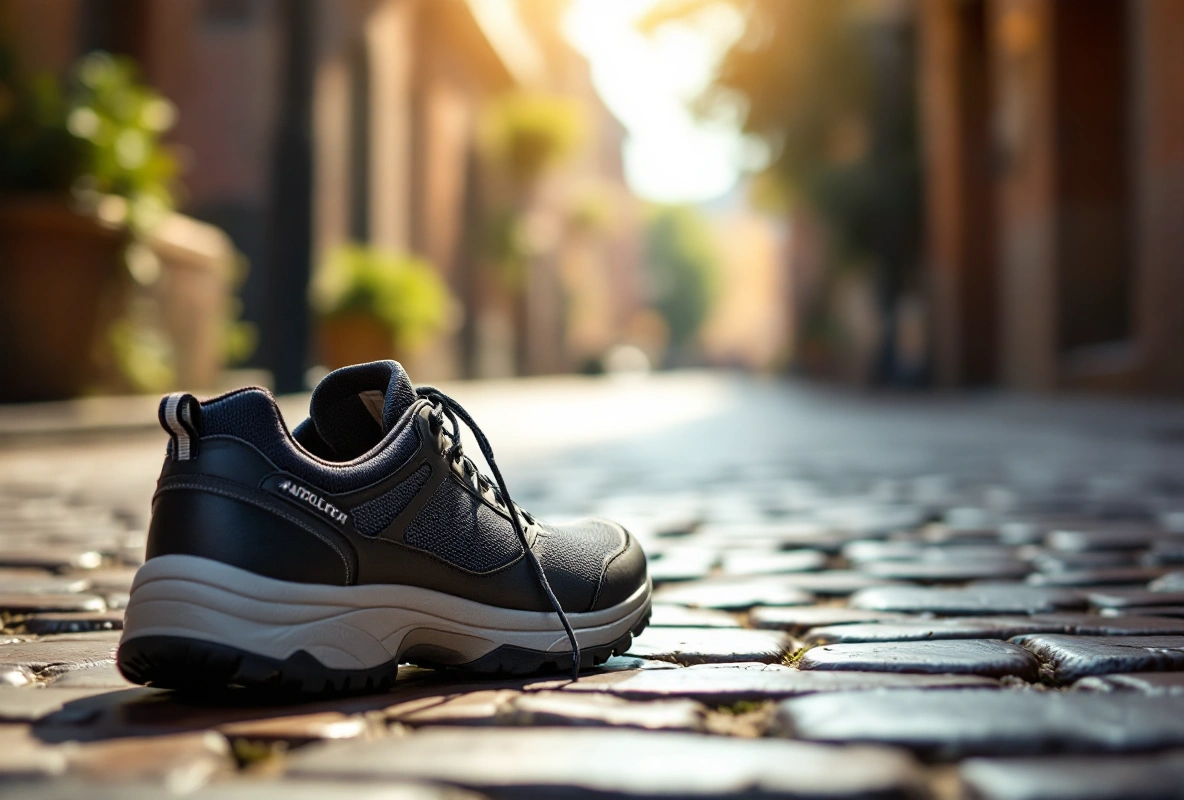
3 Best Shoes for Walking on Cobblestones in Europe in 2026
Real, verified walking shoes with the cushioning and outsole grip that hold up on European cobblestone streets.
Questions people also ask
Do I need a hiking shoe for a European city trip?
Not always. But old city centers often have cobblestone and worn stone that behaves more like light off-road ground than a modern sidewalk. A shoe with real outdoor traction, like the Merrell Moab 3, matches that ground well.
What is the best shoe for a day that mixes walking and standing?
The Brooks Addiction Walker 2 and Skechers Go Walk Arch Fit both work well for that mix. One leans on a structured, stable outsole, and the other on podiatrist-designed arch support.
Should I pack one pair of shoes or two?
Most people do fine with one versatile pair, chosen for their main terrain, plus a lighter backup if the trip mixes heavy cobblestones with dressier evenings.
Does rain really change which shoe I should pack?
Yes. Old European cobblestone and marble get slippery fast once wet, and a shoe without real waterproofing means wet socks for the rest of the day. If your trip falls in a wetter season, the Salomon X Ultra 4 GTX earns its extra weight.
Do I need a waterproof shoe for a summer trip?
Usually not as a top priority. Summer trips in southern Europe are more often limited by heat than rain, so a breathable shoe tends to serve you better than a fully sealed one that traps heat.