
Best Train Rides in Europe: How to Pick One Worth Prioritizing
How to decide which European train ride is worth building your trip around, based on route type and trip shape, not live prices.
Contents16
- What makes a train ride worth prioritizing
- Regional versus high-speed scenic routes
- Panoramic and glass-roof carriages
- How to fit a scenic ride into a realistic itinerary
- Pack for the ride, not just the destination
- Building a shortlist before you compare anything
- Weather and visibility risk on mountain and coastal routes
- What a "scenic route" typically does not include
- Luggage space on scenic trains
- First class or standard for a scenic route
- Booking lead time for popular scenic routes
- Scenic rides as day trips from a base city
- Confirm current details directly with the operator
- Combining a scenic ride with a rail pass
- Common questions
- Related reading
Some train rides in Europe are worth planning your whole route around. They're not just a way to get from A to B. Schedules and fares change constantly, and vary by season and operator, so we're not listing specific prices or timetables here. Instead, here's how to judge whether a route is worth prioritizing. And what to check before you build your itinerary around one.
What makes a train ride worth prioritizing
Look past the name of a route and check these four things:
- Scenery type. Mountain routes through the Alps, coastal routes, and river-valley routes each offer a different view. Pick the type that matches what you want to see. Don't just pick a route with a famous name.
- Seat side matters. Scenic routes often have a clearly better side, facing the mountain or facing the water. If seat selection is open when you book, take the time to pick the right side.
- Time of day. The same route can look different at midday versus near sunset. If the operator lets you choose departure times, factor the light into your choice.
- Season. Mountain routes look dramatically different in winter snow versus summer green. Coastal routes can turn foggy in shoulder season. Check recent traveler photos for the season you'll actually travel in, not just a generic listing photo.
Regional versus high-speed scenic routes
Some of the most scenic rides in Europe run on slower regional lines. That's because the route winds through terrain a straight high-speed line would tunnel through instead. If scenery is the whole point, a slower regional line can be the better choice. This holds even though a faster route technically exists between the same two points. Speed and scenery are often a tradeoff, not a package deal.
Panoramic and glass-roof carriages
A number of well-known scenic routes in Europe run special carriages with larger or panoramic windows, sometimes glass-roofed. These usually cost more than a standard reservation. They often need booking well ahead of your travel date, since seats are limited. If a route is famous for its views, check whether it has a panoramic-carriage option. Don't assume a standard seat gives you the same experience.
How to fit a scenic ride into a realistic itinerary
The mistake we see most: someone builds an entire day around a scenic ride. Then they realize it's a detour from their actual route, and it adds hours of backtracking. Before committing:
- Check whether the scenic route is on your way between two stops you already planned. Or whether it's a dedicated out-and-back trip.
- Budget the full day for it if it's a dedicated trip, not just the ride time. Getting to and from the start and end stations takes time too.
- Have a backup plan if weather ruins the view on a mountain or coastal route. These trips are worth less on a foggy or rainy day.
Pack for the ride, not just the destination
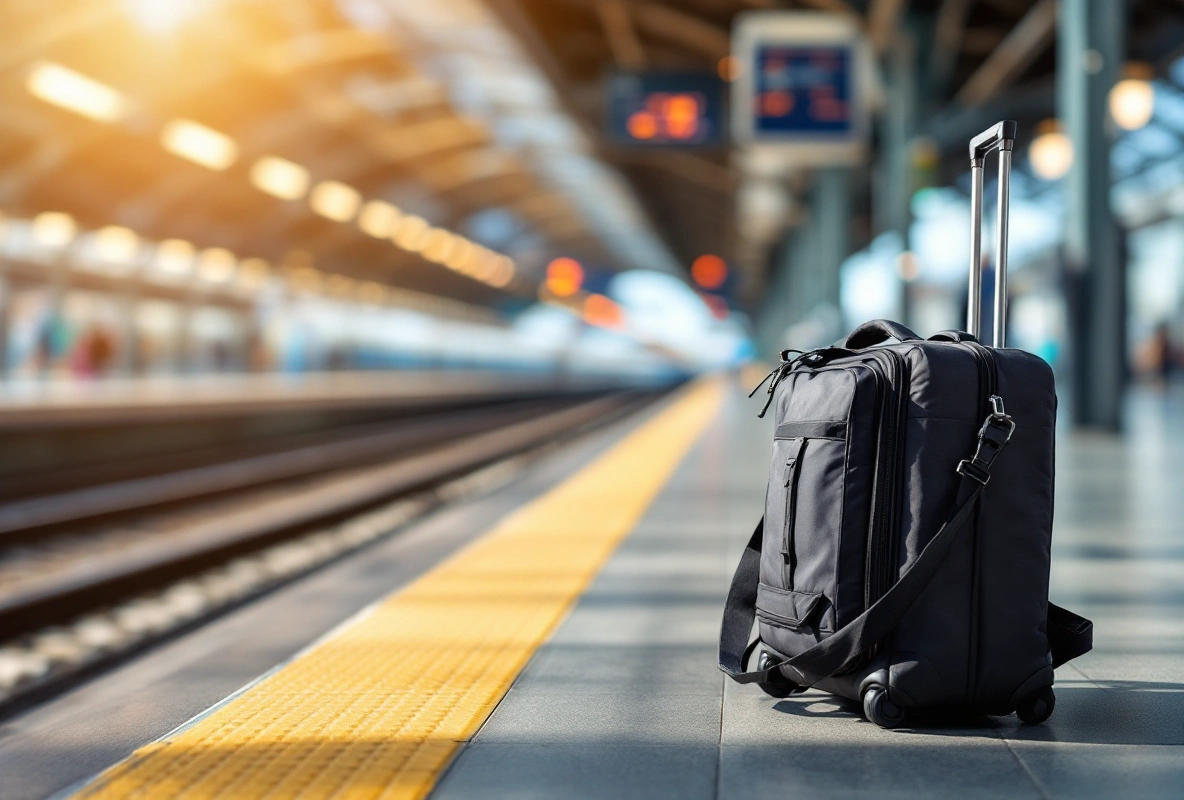
A long scenic train ride is still a train ride. Bring a bag you can lift into an overhead rack, not a bulky suitcase. Bring a layer too, since carriages can run cool even in summer. And pack something to eat if the ride runs through a meal time with no dining car. Our backpack for traveling guide covers sizing for exactly this kind of day.
Building a shortlist before you compare anything
Skip searching "best train ride in Europe" and picking the first name that comes up. Instead, build your own shortlist using the four factors above. Then narrow it against your actual trip:
- List two or three route types that interest you (mountain, coastal, river valley) based on the scenery you want.
- Check which of those route types pass through or near cities already on your itinerary. A route needing a dedicated multi-day detour is a different call than one that sits along a path you're already traveling.
- Rule out anything that only makes sense in a season you're not traveling in. A route famous for autumn colors or spring blooms isn't the same trip in the middle of summer.
This shortlist approach beats chasing a single "best" route. The right ride depends on your season, your route, and the scenery you actually want to see.
Weather and visibility risk on mountain and coastal routes
Mountain and coastal scenic routes carry more weather risk than a standard city-to-city train. Fog, low cloud, and heavy rain can flatten a mountain or coastal view completely. And there's rarely a refund or reschedule option built in for weather.
If a scenic ride is the centerpiece of your trip, plan for this. Build in a flexible day so you can shift to clearer weather. Or have a backup plan: a stop in a town along the route, a museum, or simply the ride itself as transit.
What a "scenic route" typically does not include
A scenic train ride is still a train ride, not a guided tour. Unless you've booked a guided rail tour package, don't expect commentary or planned photo stops. There's no guide pointing out landmarks either. Some operators offer optional audio guides or onboard information. Check this directly with the operator instead of assuming it's included.
Luggage space on scenic trains
Scenic and mountain routes often run with smaller carriages than a mainline high-speed train. Overhead racks on these lines are often shallower and narrower than on a long-distance express. Bring a bag that slides easily into a standard rack, not one sized right at the edge of what fits. That saves you from blocking an aisle or wrestling a case into place while other passengers wait.
If your scenic ride is a dedicated day trip rather than a leg of your main route, leave your full pack at your base hotel. Carry only a daypack for the ride itself. A lighter, smaller bag is easier to manage on a train built more for viewing than for luggage storage.
First class or standard for a scenic route
Whether first class is worth the upgrade on a scenic route depends on the train's own layout, not a blanket rule. On some routes, first class means wider seats and a quieter carriage, but the same windows as standard class. On others, especially dedicated tourist or panoramic services, first class is the only way to reach the best viewing carriage at all. Check the train's seating diagram or carriage layout, usually posted on the operator's own site. Don't assume an upgrade buys you a better view rather than just a wider seat.
Booking lead time for popular scenic routes
Well-known scenic routes, especially those with limited panoramic or glass-roof carriages, can sell out their best seats well ahead of the date, during peak season. Reservation windows vary by operator and by route. If a specific scenic ride is central to your trip plan, check the operator's own booking-window policy directly. Don't assume you can book it a few days out, the way you might a standard city-to-city ticket.
Scenic rides as day trips from a base city
You do not need to build a whole trip around one famous line. Many scenic routes work as a day out from a larger city. Take an early train out, spend a few hours in a small town at the far end, and ride back before dark. You leave your main bag at the hotel and carry only a daypack.
This also lowers the weather risk. If the first day is cloudy, you can move the ride to a clearer day later in your stay. Pick a seat on the side with the best views if the operator lets you choose.
Bring water, a snack and a layer for a day ride. Mountain valleys can be cool even in summer, and some small lines have no café car.
Confirm current details directly with the operator
Reservation rules, seasonal schedules, and panoramic-carriage pricing all change and vary by operator. Check the current details directly on the rail operator's own site before you book. This page is meant to help you judge which type of scenic route fits your trip. It isn't a live schedule or price source.
Combining a scenic ride with a rail pass
If you're traveling with a multi-country rail pass, some scenic routes are covered under normal pass rules. Others, especially dedicated tourist trains, charge separately no matter what pass you hold. Don't assume a pass covers every scenic route you've read about. Check the specific route's reservation and supplement rules before counting it as a "free" leg of your trip. See our European train pass guide for how pass coverage generally works across route types.
Common questions
Do I need a special ticket for a scenic route, or does a normal rail pass cover it? This depends on the specific route and operator. Some scenic lines run as part of the normal regional or high-speed network. They're covered like any other train under a pass. Others run under a separate tourist-focused operator with their own ticketing, outside normal pass coverage. Check this for your specific route before assuming either way.
Is it worth paying for a panoramic or glass-roof carriage? If the view is the main reason for that ride, a panoramic carriage is usually worth the extra cost. It's built specifically for sightseeing. If the ride is more of a bonus on a route you're taking anyway, a standard seat by a window is often good enough.
What's the best time of year for a mountain scenic route? It depends on what you want to see. Snow-covered peaks look dramatic in winter, but can mean reduced visibility some days. Green valleys and clearer long days are more typical in summer. Neither season is objectively better. They're just different views.
Should I plan a scenic train ride as a dedicated day, or fit it into a travel day between two cities? Fitting it into a travel day you'd already need works well, if the scenic route runs between two stops already on your itinerary. If it needs a detour or an out-and-back trip, treat it as its own day. Don't try to combine it with unpacking and repacking at a new hotel.
Do scenic trains require a different type of bag than a regular city-to-city train? Not a different bag exactly. But the same bag-sizing rules matter more, since overhead racks on scenic and regional lines tend to run smaller. See our backpack for traveling guide for packs sized to fit narrower train storage as well as airline cabin limits.
Can I bring food and drinks on a scenic train ride? Policies vary by operator and route. Some dedicated tourist trains restrict outside food in premium carriages, while others don't. Check the specific operator's rules if you plan to bring your own meal. An onboard dining car isn't guaranteed on every scenic service.
Is a scenic route worth it if I'm traveling with young kids? It depends more on ride length than on scenery. A shorter scenic leg that fits naturally into a travel day you already need works well for most families. A long, dedicated out-and-back scenic trip asks a lot of a young child's patience. Weigh the ride length against your kids' tolerance for sitting still before building a whole day around one.