
Europe by Train: A First-Timer's Guide
A first-timer's guide to traveling Europe by train, covering booking habits, luggage, and station basics.
Contents13
- Book with your route in mind, not just the date
- Understand what a "reservation" actually means
- Get to the station with real buffer time
- Pack for train travel, not flight travel
- Validate your ticket if the country requires it
- Know your options if you miss a train
- Overnight trains change the packing math
- First class isn't always what you'd expect
- Connections: give yourself real buffer
- What language barriers actually look like at the station
- Common questions
- A simple first-trip checklist
- Related reading
Taking a train across Europe for the first time feels harder than it is. Once you know a handful of habits, it runs smoother than flying between the same cities. Here's what to sort out before your first ride.
Book with your route in mind, not just the date
Some tickets lock you into a specific train and seat. Others are flexible and let you take any train on that route within a certain window. Flexible tickets cost more but save you if your plans shift. Fixed tickets are cheaper but mean you need to catch that exact train.
Figure out how firm your plans are before you book. A trip with day trips and changing plans benefits from flexible tickets on at least the legs you're unsure about.
Understand what a "reservation" actually means
On a lot of European routes, especially high-speed lines, you need a seat reservation on top of your ticket. Without one, you might not have a guaranteed seat. In some cases you can't board that specific train at all. Regional and local trains usually don't need this. Check the rule for your route before you travel, since it varies by country and train type.
Get to the station with real buffer time
Airports train you to arrive two hours early. Train stations don't need that much. But they need more than you'd guess. Big stations can mean a ten-minute walk from the entrance to your platform. Departure boards sometimes don't show the platform number until 20-30 minutes before departure.
Aim to be at the station at least 20 minutes before your train. Give yourself more time at a station you haven't used before.
Pack for train travel, not flight travel
A rail-heavy trip changes what you should pack:
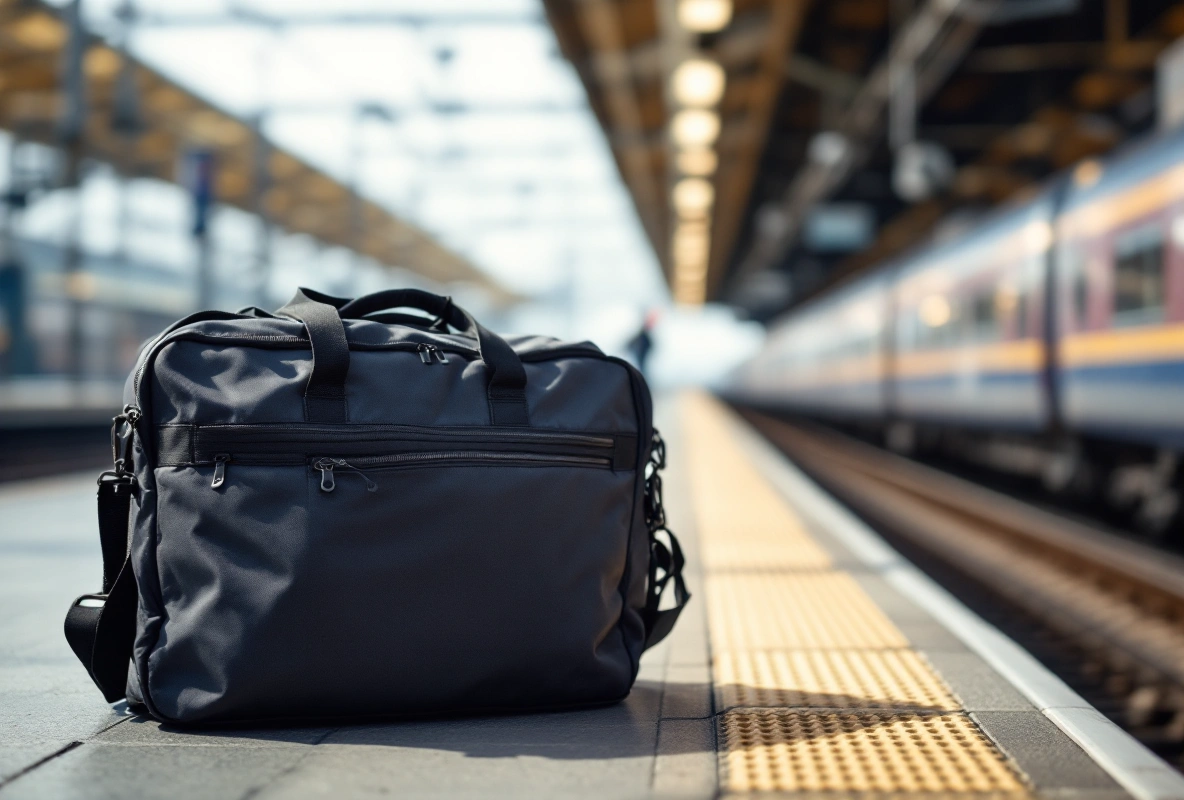
- Choose a bag you can carry, not just roll. Cobblestone streets and station stairs without elevators are common. A backpack or a bag with solid carry handles beats a wheeled case you can't lift.
- Size your bag for the overhead rack. Most trains have racks sized for a normal carry-on. Bigger racks near doors exist but fill up fast, especially on popular routes.
- Keep valuables and documents on you, not in checked luggage. Most European trains have no equivalent of checked bags. Your bag stays with you the whole ride.
Our backpack for traveling guide and packing cubes guide go deeper on sizing a bag for exactly this kind of trip.
Validate your ticket if the country requires it
Some countries require you to stamp or validate a paper ticket before boarding, usually at a small machine on the platform. Skip this step on a route that requires it, and you can get a fine from the conductor, even with a valid ticket. This isn't universal, so check the rule for the country you're in. Digital tickets on a phone usually skip this step, but confirm it for your specific ticket type.
Know your options if you miss a train
Missing a flexible ticket usually just means catching the next train on that route. Missing a fixed, reserved ticket is more of a problem. It can mean buying a new ticket at full price. If you're not confident you'll make a tight connection, pay a little more for a flexible ticket on that leg.
Overnight trains change the packing math
If your route includes an overnight train, pack differently than for a daytime ride. Keep a small bag with what you need overnight, a layer, earplugs, any medication, chargers, where you can reach it. Don't bury it in your main bag. Overhead racks and shared cabins make digging through a full pack awkward in the middle of the night.
Overnight cabins vary widely, from a basic seat to a private sleeper berth. Check what class of service you've actually booked, rather than assuming.
First class isn't always what you'd expect
On some European routes, first class is a genuinely different experience, with quieter cars and more space. On others, the difference is smaller than the price gap suggests, sometimes just a slightly wider seat. If you're deciding between classes, check the specific operator and route you're booking. Don't assume based on the general reputation of "first class."
Connections: give yourself real buffer
If your route involves changing trains, don't book the tightest connection window just because it's offered. A short connection works fine when everything runs on time. But a delayed first train can mean missing a tight connection entirely, especially in an unfamiliar station where you need extra time to find the next platform. Build in a wider buffer for any connection in a station you've never used. Only tighten it up on a return trip through stations you already know.
What language barriers actually look like at the station
Most major European stations have signage in English alongside the local language. Staff at ticket counters in bigger cities usually speak enough English to help with a booking question. Smaller regional stations are more of a mixed bag. Write your route, dates, and destination down, on your phone or on paper. It makes any language gap easier to work around than trying to explain it out loud.
Common questions
Do I need to print my ticket, or is a phone screen fine? Most operators now accept a digital ticket on your phone. Download or screenshot it ahead of time in case you lose signal at the station. Some countries and ticket types still expect a printed copy, so check the rule for your ticket before assuming a phone screen works everywhere.
What happens if my train is delayed and I miss a connection? This depends on your ticket type. A single ticket booked as one connected itinerary usually comes with some protection, meaning the operator gets you on a later train. Two separate tickets bought independently usually don't have that protection. A delay on the first leg is your own risk to manage. Build in more buffer when you've booked legs separately.
Is train travel between countries different from traveling within one country? The core habits stay the same: arrive early, know your platform, check reservation rules. What changes is that some cross-border routes run less often. Some also need a change at the border rather than a through train. Check this for the border you're crossing.
A simple first-trip checklist
- Book tickets with your actual plan flexibility in mind.
- Confirm whether your route needs a seat reservation.
- Plan to arrive at the station with real buffer time.
- Pack a bag you can carry up stairs, sized for a standard overhead rack.
- Check if your country requires ticket validation before boarding.
- Keep your documents and valuables on your body, not buried in your bag.